
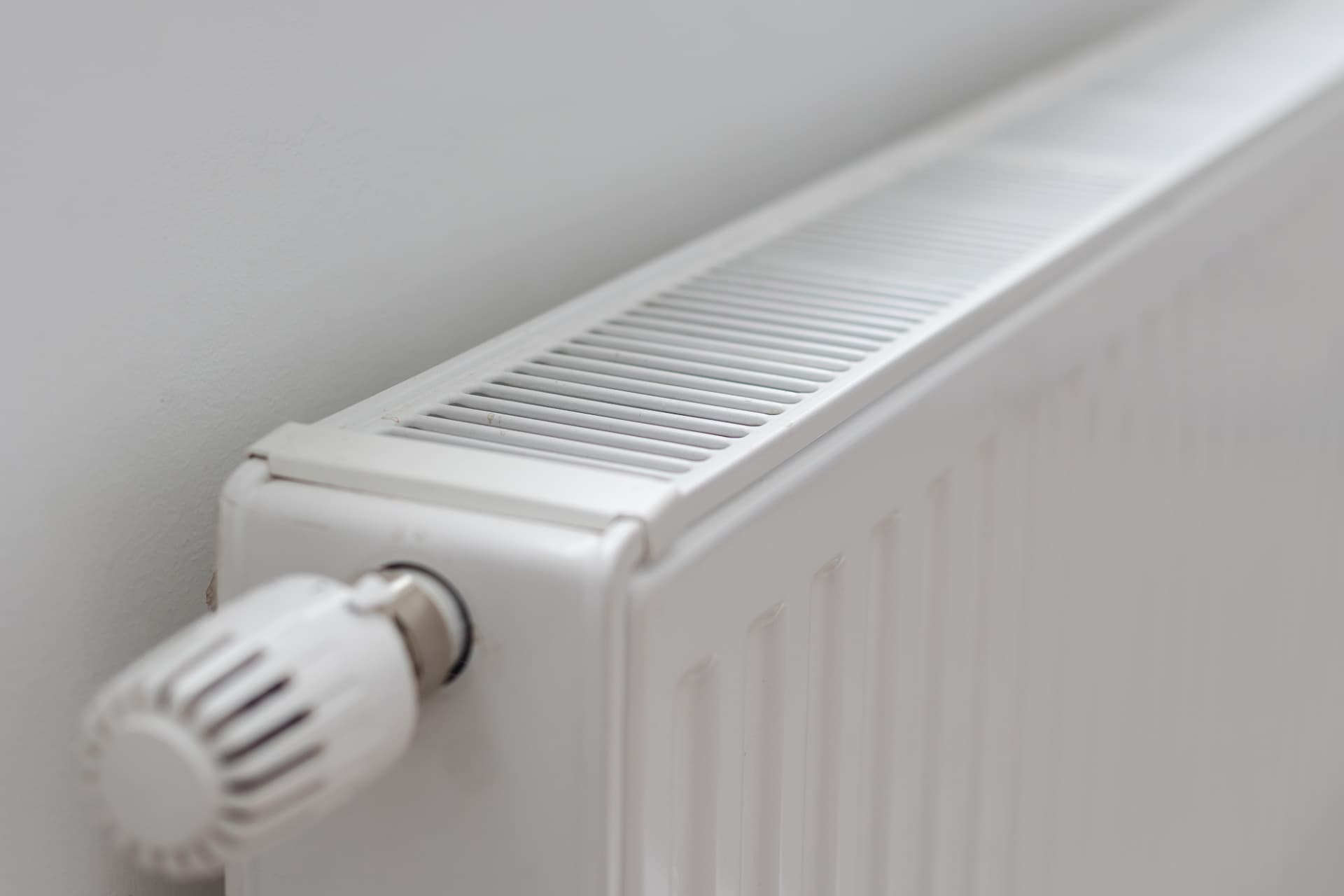
Radiators & towel rails
Radiator Installation inLytham St Anne's: RoomsThat Actually Heat Up
New radiators, replacements, relocations and towel rails fitted and balanced properly, so the cold room at the end of the run gets hot, the system stops needing bleeding every fortnight, and nothing weeps behind the panel a month later.
Free survey · Fixed written quote before work starts · 12-month workmanship guarantee · £1m public liability insurance
24/7
Emergency response, every day of the year
£1m
Public liability insurance in force
12 mo
Workmanship guarantee on every job
5.0
Google rating from 8 reviews
Free
Survey, then a fixed written quote
What this covers
Radiator, pipework and towel rail work, no gas, no boiler work
This service covers the wet side of a heating system: fitting new radiators, replacing old or corroded ones, relocating radiators when a room is being altered, adding radiators to rooms that never had adequate heat, installing heated towel rails, replacing valves and adding thermostatic radiator valves, and the pipework alterations all of that requires.
It does not include gas work, boiler servicing or boiler installation. Those need a Gas Safe registered engineer. What is offered here is radiators, pipework, valves, hot water cylinders and heating elements, the parts of a heating system a plumber works on, done properly.
The most common request is replacement: a radiator that is corroded, weeping at a valve, permanently cold at the bottom, or simply an old panel that no longer suits the room. Modern panels transfer heat far more effectively than the equivalent physical size from decades ago, which often means better heat in the same footprint.
The second most common is the cold room. That is usually not a radiator fault at all; it is sizing, balancing, sludge or a valve that is not opening. Diagnosing which of those it is before selling anyone a bigger radiator is the difference between fixing the problem and moving it.
Every job starts with a free survey and gets a fixed written quote before work begins. The system is drained and refilled properly, joints are checked hot as well as cold, and the work carries a 12-month workmanship guarantee.
Who it is for, and when
A radiator that never gets properly hot
Cold at the bottom means sludge; cold at the top means air; cold all over usually means a valve or balancing issue.
Corroded, leaking or dated radiators
Weeping valve unions, rust streaks and pinholes. Replacement now is far cheaper than a pinhole failure over a floor.
A room being altered or extended
Radiators relocated or added when walls move, kitchens change or a room finally gets used properly.
Bathrooms without decent heat
Heated towel rails fitted and connected correctly, sized so they actually warm the room rather than just the towel.
What happens if it waits
The slow, expensive decline of a heating system nobody looks at
Heating systems degrade internally where you cannot see it. Oxygen entering the water reacts with steel radiator panels, and the resulting magnetite sludge settles in the bottom of every radiator on the system. That is why a radiator goes cold across its lower half while the top stays warm; the heat-transfer surface is silted up and no longer doing its job.
The consequences compound. Sludge restricts circulation, so the pump works harder and the system takes longer to reach temperature, which means it runs longer for the same comfort. You pay for heat that is being blocked from getting into your rooms.
Sludge is also corrosive. It sits against the bottom of the panel and eats through from the inside until a pinhole appears. Pinholes never appear conveniently; they appear over flooring, and they weep continuously into the floor deck until they are noticed.
Repeated air in the system is its own warning. If radiators need bleeding regularly, air is being drawn in somewhere, and every bit of fresh oxygenated water introduced accelerates internal corrosion. Bleeding is the symptom being managed while the cause continues.
Then there is the DIY route. Changing a radiator sounds simple until a corroded valve union will not release, the isolation does not hold, and a drained-down system has to be refilled and re-vented on a winter evening. The cost of getting that wrong, over a carpet or a wooden floor, is many times the cost of having it done.
Common mistakes we get called out to fix
- Bleeding the same radiator every couple of weeks instead of finding why air keeps entering the system.
- Fitting a bigger radiator into a cold room when the real fault was balancing, a stuck valve or sludge.
- Draining a system without knowing whether the fill and isolation valves actually hold, then being unable to refill it.
- Reusing corroded valve unions on a new radiator, guaranteeing a weep at the joint within weeks.
- Flushing nothing and adding no inhibitor after refilling, so the brand-new radiator starts silting up immediately.
- Leaving a radiator visibly rust-streaked at the bottom until the pinhole appears over the floor.
Our process
Five steps, in the same order, every time
01
Survey and assessment
A free survey of the room, the existing radiator or proposed position, the pipework layout, the valves and the behaviour of the wider system, including how the rest of the property heats.
02
Diagnosis and specification
The real cause of poor heat identified, sizing, balancing, sludge or valves, and the correct radiator or towel rail specified for the room, with the reasoning explained rather than assumed.
03
Fixed written quote
Radiators, valves, pipework alterations and making good all priced in writing before any work begins, so there is nothing added mid-job.
04
Installation
System drained down safely with floors protected, brackets fixed securely into sound substrate, pipework altered cleanly, new valves fitted and the radiator hung level.
05
Refill, balance, test and guarantee
System refilled, vented and balanced so heat is distributed properly, inhibitor considered, joints re-checked hot after expansion, and the work covered by a 12-month workmanship guarantee.
What you actually get
The difference it makes once it's done properly
The cold room gets warm
Balancing and correct sizing solve most cold-room complaints permanently, rather than just adding more radiator to an unbalanced system.
Faster heat-up, less running time
A system with clear circulation and correctly balanced flow reaches temperature sooner, so it runs for less time to achieve the same comfort.
No weeping joints later
Valve unions renewed rather than reused, and every joint re-checked hot once the system has expanded; that is when marginal joints reveal themselves.
Room-by-room control
Thermostatic radiator valves fitted where appropriate, so you heat the rooms in use rather than the whole house at one setting.
Floors and decoration protected
Draining down and refilling is where the damage risk sits. It is done with protection in place and with isolation proven first.
Guaranteed and insured
12-month workmanship guarantee, manufacturer warranties up to five years on parts subject to their terms, and £1,000,000 public liability insurance.
In detail
Radiator types, valves, sizing and system balancing
Getting a radiator installation right is mostly about the things that are invisible afterwards: output matched to the room, valves chosen correctly, and the system balanced so every radiator gets its share.
Radiator types and construction
Standard steel panel radiators are specified as single or double panel with single, double or no convector fins. Those combinations produce very different outputs from the same physical size, which is what makes it possible to improve heat without taking more wall space.
Heated towel rails are the standard choice in bathrooms and en-suites, but a ladder rail alone frequently produces less output than the panel radiator it replaced. Where a bathroom needs to be genuinely warm, that shortfall has to be planned for rather than discovered in January.
Column, cast-style and designer radiators are heavier and need substrate that can carry them, a decorative radiator on plasterboard without proper fixing is a failure waiting to happen. Fixing method is part of the specification, not an afterthought.
Valves and controls
Every radiator needs a control valve at one end and a lockshield at the other. The lockshield is not decorative; it is the balancing valve that sets how much flow that radiator takes relative to the rest of the system.
Thermostatic radiator valves give room-by-room control and stop unused rooms being heated to the same level as occupied ones. They should not normally be fitted in the room containing the main room thermostat, because the two controls fight each other.
Valve bodies come in angled, straight and corner patterns to suit the pipework approach, and old TRV heads seize onto their pins over time; a radiator stuck cold is frequently a stuck TRV pin rather than a blockage.
Sizing and why rooms stay cold
Radiator output has to suit the room: its volume, its external walls, its window area and its exposure. Older properties across Lytham St Anne's and Preston, and exposed coastal properties, lose heat faster than modern insulated stock and frequently carry radiators that were undersized from the start.
But an undersized radiator is only one of four causes of a cold room. The others are balancing (radiators nearest the pump taking most of the flow), sludge in the panel, and a valve that is not opening. Replacing a radiator without checking those three simply relocates the complaint.
Balancing is the step most often skipped. Adjusting lockshield valves so each radiator takes an appropriate share is what makes the far end of a system heat at the same rate as the near end, and it costs nothing but time.
Water quality, sludge and system protection
Magnetite sludge is the main long-term enemy of a wet heating system. It settles in radiator bottoms, restricts circulation, wears the pump and corrodes panels from the inside until they pinhole.
Where sludge is evident, cleaning or flushing the system before fitting new radiators is worth doing, installing a clean new panel into a dirty system just gives the sludge somewhere new to settle.
Corrosion inhibitor should be present after any drain-down and refill. It is inexpensive and it is what protects both the new radiator and the ones you kept. Persistent air ingress is investigated rather than managed by repeated bleeding.
Relocations, additions and pipework alterations
Moving a radiator, for a kitchen refit, a new door position or a room being reconfigured, means altering the pipework in the floor void or wall, then making good. It is straightforward work when planned and messy when improvised, so it is surveyed first.
Adding a radiator to a room that never had one requires the existing system to have capacity and the pipework to be reachable. Where it is, the run is taken from a sensible point and installed neatly rather than surface-clipped across a wall.
Where a run has to be exposed, it is planned with the customer beforehand. Nobody should discover the routing after the floor has gone back down.
Residential, rentals and small commercial
Domestic work is the majority: replacements, cold-room fixes, bathroom towel rails and radiators moved during renovation, across the Fylde coast and Preston area.
For landlords, radiator condition is a recurring source of tenant complaints and mid-tenancy call-outs. Replacing a corroded panel and balancing the system removes a whole category of repeat visits.
Small commercial premises with domestic-scale wet heating, offices, salons, small units, are covered for the same radiator, valve and pipework work, scheduled around trading where the heating has to be off.
Common questions
Answers before
you pick up the phone
Still unsure? Ring Jack on 07474 039934; advice costs nothing.
Related services
- Plumbing & HeatingGeneral plumbing and maintenance across the home, from pipework repairs to radiator fault diagnosis.
- Hot Water Cylinder & Element RepairsDraining cylinders and tanks, replacing immersion heating elements and thermostats to restore hot water.
- Leak DetectionTracing hidden leaks in pipework and appliance feeds before they damage floors, ceilings and plaster.
- Shower, Bath & Wash Basin InstallationShower cubicles and valves, bath panels, toilets and wash basins fitted and sealed to a clean finish.
- All plumbing and bathroom services
- Pro Plumbing Solutions home
Where this service is available
Not listed? Ring anyway, most of the Fylde coast and central Lancashire is still workable. You can also send the job details through the contact form.
Warm rooms, balanced system, no weeping joints
Free survey, a fixed written quote, radiators sized and balanced properly rather than guessed at, and a 12-month workmanship guarantee on every installation.
Free initial survey · Fixed written quote · £1,000,000 public liability insurance · 12-month workmanship guarantee