
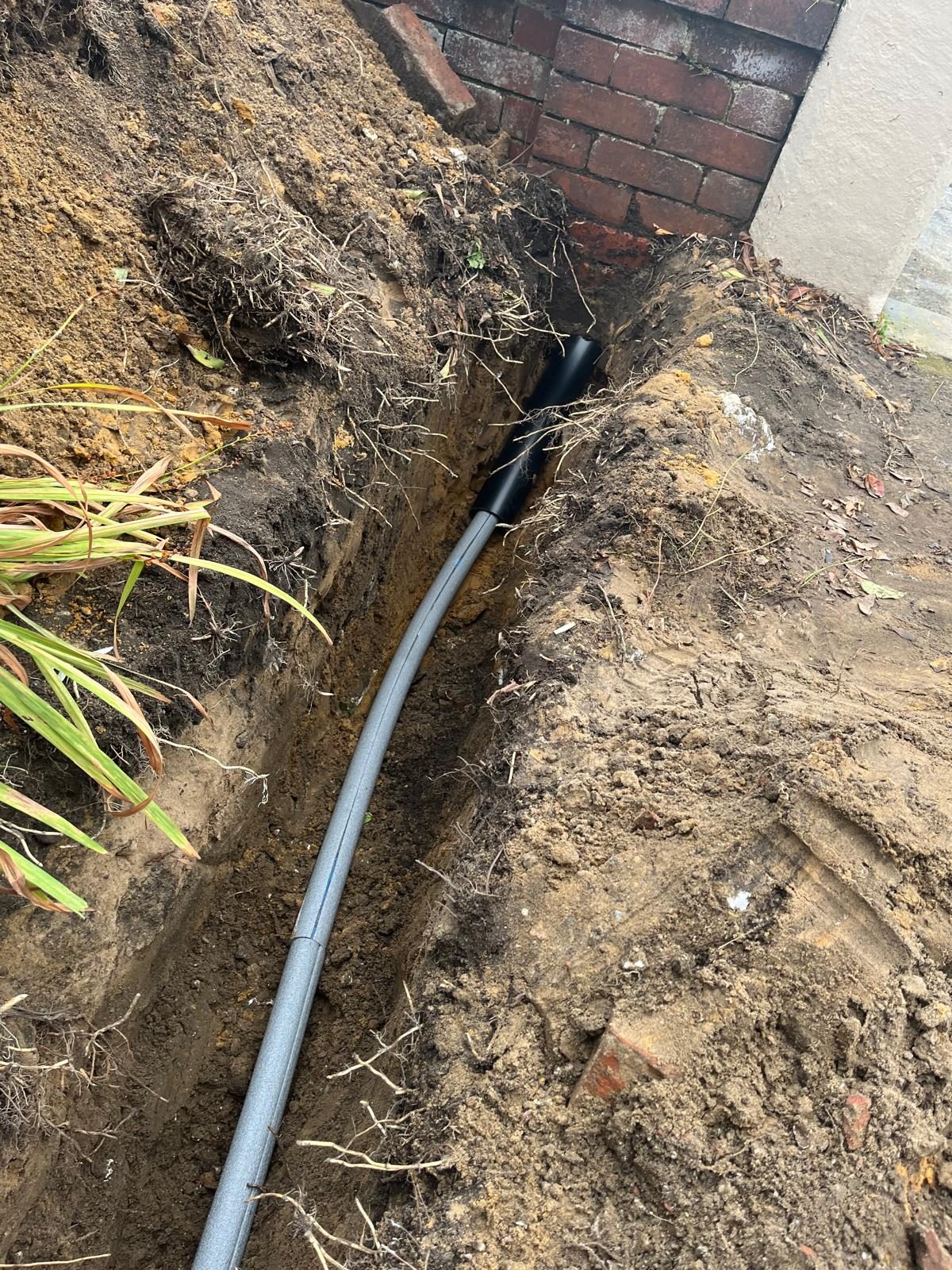
Leak detection
Leak Detection inLytham St Anne's: FoundBefore It Reaches the Ceiling
Find out exactly where the water is coming from and what it will cost to stop, leaks traced back to the failure point rather than guessed at, so you replace a fitting instead of a floor, a ceiling and a fortnight of drying time.
Free initial survey · Fixed written quote before any repair · 12-month workmanship guarantee · £1m insured
24/7
Emergency response, every day of the year
£1m
Public liability insurance in force
12 mo
Workmanship guarantee on every job
5.0
Google rating from 8 reviews
Free
Survey, then a fixed written quote
What this covers
Tracing water back to its source, not just mopping up where it lands
Leak detection is the work of establishing where water is actually escaping, which is almost never where you first see it. Water runs along the underside of pipes, across joists, down cavity walls and along floor decks before it finds a route through a ceiling or a skirting board. The damp patch is the exit point; the leak can be metres away.
This service covers hidden leaks in domestic supply and heating pipework, appliance feeds, bathroom and shower waste, cylinder and tank connections, and the joints buried under floors and behind tiling. It is the diagnostic step that comes before any repair, and it is what stops you paying to open up the wrong wall.
The approach is methodical: isolate, observe, eliminate. Sections of the system are shut off in sequence to narrow the loss to a specific run or circuit, appliance feeds and visible pipework are checked first, and only then does anything need lifting or opening. That order exists to keep the destructive part of the job as small as possible.
Once the source is confirmed, you get a fixed written quote for the repair, and in most cases it can be done there and then. One Google review describes precisely that outcome: a leak located in the plumbing system and the necessary repair carried out, with a prompt response and notification when the van was on its way.
The initial survey is free, and there is no call-out charge for a quote. If water is actively running, do not wait for an appointment, the 24/7 emergency line applies to leaks as well, and containment always comes before diagnosis.
Who it is for, and when
You have a stain but no obvious source
A brown ring on a ceiling, a damp skirting board, a patch of blown plaster or a floor that feels soft; all classic exit points for a leak that started somewhere else.
Your water bill has moved for no reason
A continuous underground or under-floor loss shows up in metered usage long before it shows up in the house.
Your heating loses pressure repeatedly
A sealed system that needs topping up regularly is losing water somewhere, often at a radiator valve, a buried joint or a towel rail connection.
Something smells damp and you cannot place it
Musty smells in a cupboard, hallway or bedroom above a bathroom usually mean a slow leak that has been running quietly for weeks.
What happens if it waits
A hidden leak is a slow demolition job you are paying for by the week
The damage from a hidden leak is rarely caused by volume; it is caused by duration. A few millilitres an hour into a floor void keeps timber permanently wet, and permanently wet timber is what rot needs. Joist ends, floor decking and stud bottoms fail quietly and are only discovered when something starts to move underfoot.
Plaster and plasterboard behave the same way. Water wicks upwards and outwards through the board long before it stains, so the visible mark is always smaller than the saturated area behind it. Repeated wetting and drying blows the plaster off the wall, and repeated soaking eventually brings a ceiling down.
Then there is mould. Persistent moisture behind tiling, under flooring and inside cavities creates exactly the conditions mould needs, in exactly the places you cannot clean. This is the part of a leak that affects the people living in the house rather than just the building.
The financial escalation is stark. A leaking joint caught early is one fitting and an hour. The same leak found six months later is a fitting plus floor decking, plus plaster, plus decoration, plus drying time during which the room cannot be used. Nothing about the plumbing got harder; the delay did all of it.
The other cost is guesswork. Homeowners commonly try one repair after another based on where the water appears: re-siliconing a shower, re-bedding a WC, replacing a trap. Each attempt costs money and time while the actual leak keeps running, which is why locating the source first is always the cheaper route.
Common mistakes we get called out to fix
- Assuming the leak is directly above the stain; water travels along joists and pipe runs before it drops.
- Re-siliconing a shower enclosure repeatedly when the water is actually escaping at the tray waste or the pipework behind the wall.
- Topping up a sealed heating system every few weeks instead of finding the loss, fresh water repeatedly introduced also accelerates corrosion inside the system.
- Lifting flooring or cutting a ceiling open at the first guess, creating damage that was never necessary.
- Drying out and redecorating before the source is confirmed, so the new plaster gets ruined too.
- Ignoring a small damp patch because it has not got bigger; a stable stain simply means water is arriving at the same rate it evaporates.
Our process
Five steps, in the same order, every time
01
Inspection
A free survey of the affected area: the visible symptom, the rooms and voids around it, appliance feeds, accessible pipework and the layout of the system above and below the damp point.
02
Isolation and elimination
Sections of the supply, heating and waste systems are shut off in sequence and observed, narrowing the loss to a specific run or circuit before anything is opened up.
03
Locate and confirm the source
The failure point is confirmed at the pipe, fitting, valve, appliance connection or waste joint responsible, with the minimum access necessary rather than exploratory demolition.
04
Fixed written quote and repair
The repair is priced in writing, then carried out: failed sections and fittings replaced rather than patched, with isolation valves added while access is open where it makes sense.
05
Test, verify and guarantee
The repair is pressure-tested and re-checked under normal use, the surrounding pipework inspected for anything about to fail the same way, and the work covered by a 12-month workmanship guarantee.
What you actually get
The difference it makes once it's done properly
Minimum damage to find it
Isolation and elimination first, access second. The point is to open the smallest possible area, not to go hunting through floors and ceilings.
You stop paying for the water
A continuous loss on a metered supply is money leaving every hour. Finding it ends that immediately as well as ending the damage.
The repair is priced, not estimated
Once the source is confirmed you get a fixed written quote, so the diagnostic stage does not turn into an open-ended bill.
Structure protected
Catching a leak while it is still a plumbing problem is what keeps joists, floor decking, plaster and ceilings out of the job.
No repeat visits for the same leak
The failed component is replaced and the surrounding run checked, rather than the symptom being sealed over and left to reappear.
Insured and guaranteed
£1,000,000 public liability insurance in force, and a 12-month workmanship guarantee on the repair carried out.
In detail
Where leaks hide, how they are traced, and what the repair involves
Different leaks behave differently. Knowing the signature of each one is most of the diagnosis; here is what that looks like across the property types common on the Fylde coast.
Supply pipework leaks
Pressurised supply leaks are constant, which makes them the most damaging and, usefully, the easiest to confirm: isolating the main and watching for continued flow or pressure loss narrows the fault to the supply side quickly.
Typical failure points are compression joints that have been overtightened, push-fit fittings that were never fully seated, corroded fittings in older copper systems, and pipework damaged by a nail or screw driven through a floor or stud.
Repairs cut out the failed section and replace the fitting rather than reseating it. Where a run is buried and awkward, it is often better to re-route a short length in a serviceable position than to bury a fresh joint in the same inaccessible place.
Heating system leaks
A sealed heating system that loses pressure is leaking somewhere, even when nothing is visibly wet, small losses evaporate off hot pipework before they ever drip. Repeated topping up masks the fault and introduces fresh oxygenated water, which accelerates internal corrosion.
The usual sources are radiator valve glands and unions, towel rail connections, buried joints in floor voids, and pinholes in radiators themselves where sludge has sat against the bottom of a panel.
Diagnosis involves isolating radiators individually and observing pressure behaviour, then confirming at the suspect connection. Repairs range from a valve or union replacement to a section of pipework or a radiator swap.
Waste, shower and appliance leaks
Waste leaks are intermittent, they only leak while something drains, which is why they are so often misdiagnosed. A shower that leaks only in use, or a washing machine that leaks only on discharge, points firmly at waste rather than supply.
Shower trays and baths are a special case: the failure is frequently the seal at the tray junction, a waste connection under the tray, or movement in a flexing floor rather than the visible silicone. Re-siliconing over that will not hold.
Appliance feeds and flexible tails behind washing machines, dishwashers and under sinks are one of the most common sources of hidden kitchen leaks, and are usually the cheapest thing in the house to renew.
Property types and where water travels
In period properties around Lytham St Anne's and Preston, deep joist voids and solid ground floors mean water can travel a long way before it appears. Pipework buried in solid floors is a known problem area in older stock.
In interwar and postwar semis in Kirkham, Freckleton, Warton and Blackpool, first-floor bathroom leaks characteristically appear on the kitchen or hallway ceiling below, often a metre or more from the actual source.
In modern estate housing across Penwortham, Bamber Bridge and Leyland, plastic push-fit in floor voids and stud walls is standard. It is reliable when installed correctly, but a partially seated fitting will weep for years.
Coastal properties see more corrosion at external and loft-level pipework, and unheated lofts and garages are where freeze damage begins in a cold snap.
Verification and prevention
A repair is not finished when the drip stops. Joints are pressure-tested, then re-checked once the system has heated, expanded and cycled; plenty of joints are dry cold and weep hot.
While access is open, isolation valves are added at appliances and vulnerable runs where practical, so a future problem can be shut off in seconds without draining the property.
Exposed pipework in lofts, garages and against external walls is insulated as part of the repair where it is relevant. That is the single cheapest measure against a winter burst on this coast.
Residential, rentals and small commercial
Most leak work is domestic. For owner-occupiers the driver is usually visible damage; for landlords it is a tenant report and the need for a clear written record of what was found and repaired.
Holiday lets and second homes along the coast are the highest-risk category, because an unattended leak can run for weeks. Isolation valves and a working stopcock matter far more in a property that is regularly empty.
Small commercial premises are covered for the same domestic-scale systems: supply pipework, water heaters, washroom waste and appliance feeds, scheduled to keep the business trading.
Common questions
Answers before
you pick up the phone
Still unsure? Ring Jack on 07474 039934; advice costs nothing.
Related services
- Emergency Call Out24/7 response for burst pipes, sudden leaks and lost hot water, contained fast, then repaired properly.
- Plumbing & HeatingGeneral plumbing and maintenance across the home, from pipework repairs to radiator fault diagnosis.
- Sink Drainage Repairs & UnblockingBlocked and slow-draining sinks cleared, waste pipework repaired and re-sealed against future leaks.
- Tap & Stopcock RepairsTap repairs and replacements, stopcock renewals, under-sink filters and boiling water tap installs.
- All plumbing and bathroom services
- Pro Plumbing Solutions home
Where this service is available
Not listed? Ring anyway, most of the Fylde coast and central Lancashire is still workable. You can also send the job details through the contact form.
Find the leak now, while it is still just a plumbing job
Free survey, methodical tracing with the minimum access needed, a fixed written price for the repair, and a 12-month workmanship guarantee. Emergencies answered 24/7.
Free initial survey · Fixed written quote · £1,000,000 public liability insurance · 12-month workmanship guarantee