Drainage & unblocking
Blocked Drains Cleared inLytham St Anne's, And theCause Dealt With Too
Sinks, showers, baths, WCs and external gullies cleared quickly, then the reason it blocked identified, so you are not ringing again in six weeks about the same slow drain.
24/7 emergency response · Same-day attendance on smaller jobs where possible · Fixed quote · 12-month workmanship guarantee
24/7
Emergency response, every day of the year
£1m
Public liability insurance in force
12 mo
Workmanship guarantee on every job
5.0
Google rating from 8 reviews
Free
Survey, then a fixed written quote
What this covers
Clearing the blockage is half the job
This service covers domestic drainage and waste: blocked kitchen sinks, slow-draining showers and baths, blocked basins, overflowing or slow WCs, blocked waste pipework and traps, external gullies and the drainage connections around a property.
The distinction that matters is between clearing a blockage and fixing the reason for it. Anyone can push a blockage through. If the waste run has insufficient fall, if a trap is the wrong type, if a pipe has partially collapsed or if a joint has silted at a bad transition, it will block again, and repeat clearing is money spent managing a fault rather than removing it.
So the work is done in two parts: clear it now, then establish why it happened. Sometimes the answer is simply usage, fat down a kitchen sink, hair at a shower trap, and the honest advice is preventative rather than paid work. Sometimes it is a defect in the pipework that is worth correcting once.
Blocked drains are treated as urgent because they escalate fast: a blocked WC in a single-bathroom house or a kitchen backing up is not something a household can work around. The 24/7 emergency line applies, and smaller jobs can often be attended the same day depending on the size of the job and the schedule.
Quotes are fixed and written, there is no call-out charge for a quote, and the work carries a 12-month workmanship guarantee with £1,000,000 public liability insurance in force.
Who it is for, and when
Kitchen sink backing up
Almost always fat and food solids congealed in the waste run. Clearing it is straightforward; keeping it clear is a habit change.
Shower or bath draining slowly
Hair and soap product bound into the trap and the first metre of waste, or a fall problem if it has always been slow.
WC slow, rising or overflowing
Urgent in a single-bathroom property. Cleared and the cause checked, because a repeatedly blocking WC usually has a reason.
Gullies and external drains
Leaf litter, silt and debris in gullies and external runs, common in autumn and after coastal storms.
What happens if it waits
A slow drain is a warning; a blocked one is already a mess
Blockages do not appear suddenly. A waste pipe narrows gradually as fat, hair and residue build on the pipe wall, and the drain gets slower and slower until one ordinary use tips it over. The 'sudden' blockage is the last day of a process that has been running for months.
When it does block, it does not stay contained. Waste water backs up to the lowest available outlet, which is why a blocked kitchen run appears in a downstairs shower and a blocked stack shows at a ground-floor WC. That water is contaminated, and it comes out over flooring you have to live on.
There is a real hygiene dimension. Standing waste water and the biofilm that grows in a partially blocked pipe are why a slow drain smells, and that smell is coming into the room continuously. Air fresheners and bleach treat the smell while the cause keeps growing.
Chemical drain cleaners are the most common escalation. Repeated use of caustic products damages traps, seals and older pipework, and when they fail to clear the blockage a plumber then has to work on a pipe full of caustic liquid, which is both hazardous and more expensive.
The bigger risk is the blockage that keeps returning. A repeatedly blocking run is telling you something structural: inadequate fall, a bad transition, a partially collapsed section or a fitting installed wrongly. Paying to clear it every few months costs far more than diagnosing it once, and a genuine defect only gets worse.
Common mistakes we get called out to fix
- Pouring fat, oil and cooking residue down the kitchen sink, the single biggest cause of domestic blockages.
- Flushing wipes, cotton pads and sanitary items, including anything labelled 'flushable'.
- Relying on repeated caustic drain cleaner, which damages traps and pipework and makes the eventual repair worse.
- Ignoring a drain that has always been slow; that is usually a fall or installation defect, not usage.
- Dismantling a trap without a container underneath and flooding the cupboard below.
- Paying to clear the same blockage repeatedly instead of finding out why it keeps happening.
Our process
Five steps, in the same order, every time
01
Attend and inspect
The affected fitting, its trap, the visible waste run and the other outlets in the property are checked, which establishes quickly whether it is a local blockage or something further down the system.
02
Locate the blockage
The blockage is narrowed to a specific section, trap, waste run, stack or external gully, before anything is dismantled, so the work stays contained.
03
Clear it
Blockage cleared using the appropriate method for the pipework, with the area protected. Traps and accessible sections are cleaned rather than simply pushed through.
04
Establish the cause
Falls, trap type, pipework condition and transitions are checked to see whether this was usage or a defect, and any repair needed is quoted in writing rather than assumed.
05
Test, verify and guarantee
The run is flow-tested to confirm it clears fully rather than just moves, joints re-checked for leaks after disturbance, the area left clean, and the work covered by a 12-month workmanship guarantee.
What you actually get
The difference it makes once it's done properly
Usable again the same visit
Most domestic blockages are cleared on the first attendance, with smaller jobs often available same-day depending on the schedule.
The cause identified, not just the symptom
Falls, traps and pipework condition are checked, so a recurring blockage gets diagnosed instead of being cleared on repeat.
No caustic chemicals needed
Mechanical clearing avoids the damage repeated chemical treatment does to traps, seals and older pipework.
Contained, clean work
Waste water is contaminated. The area is protected before anything is opened, and left clean afterwards.
Out-of-hours cover
A blocked WC or backing-up kitchen in a single-bathroom household is urgent, and the phone is answered 24/7 every day of the year.
Guaranteed and insured
12-month workmanship guarantee on the work carried out and £1,000,000 public liability insurance in force.
In detail
Where blockages form, why they recur, and how they are cleared
Each fitting in a property blocks in a characteristic way. Recognising the pattern is what tells you whether the problem is what goes down the drain or how the drain was built.
Kitchen waste and fat build-up
Kitchen runs block because fats and oils enter warm and liquid, then cool and solidify on the pipe wall a metre or two downstream, catching food solids as they pass. The bore narrows until the run cannot cope with a sink emptying at full flow.
Dishwasher and washing machine discharges make it worse, because they push a large volume through in a short time into a partially restricted pipe. A kitchen that drains fine until the dishwasher runs is a classic partial blockage.
Clearing means removing the deposit rather than punching a hole through it. A hole re-closes within weeks, which is why so many kitchen drains are cleared repeatedly at the same point.
Bathroom wastes, hair and traps
Shower and bath blockages are overwhelmingly hair bound together with soap and product residue, forming a mat at the trap or in the first stretch of waste. Basins block the same way, with the addition of toothpaste and cosmetic residue.
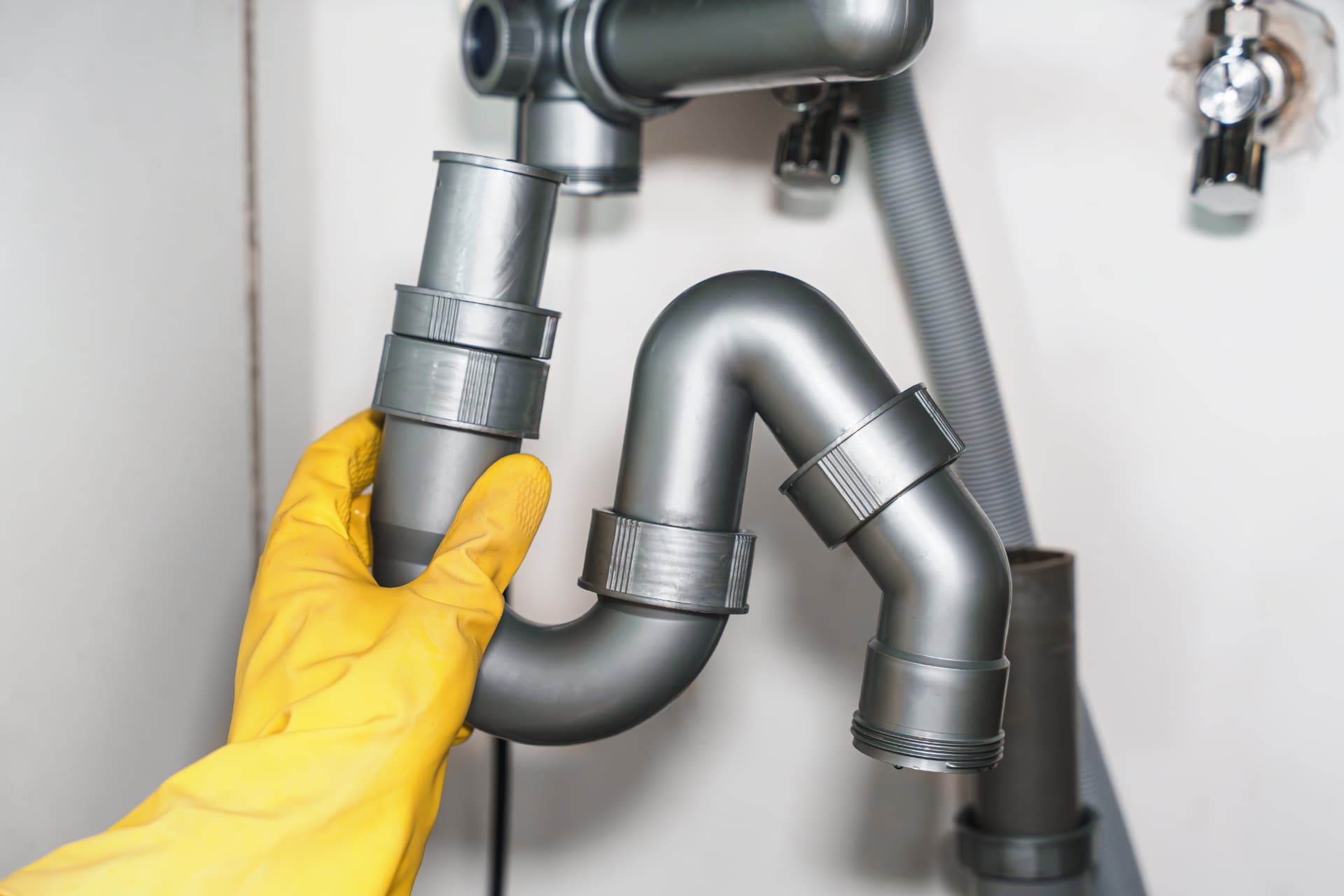
Trap type matters enormously in bathrooms. Shallow traps under low-profile trays, and space-saving traps behind vanity units, have less capacity and less self-scouring flow, so they need clearing more often; that is a design consequence, not a fault.
Bottle traps look neat under a basin but block more readily than a standard tube trap. Where a basin blocks repeatedly, changing the trap is often the permanent fix.
WCs, soil pipes and what should never be flushed
WC blockages are caused by wipes, cotton pads, sanitary items and excessive paper. Wipes marketed as flushable do not break down in the timeframe a drainage system needs, and they are the leading cause of WC and soil-stack blockages.
A WC that rises then slowly clears is partially blocked and will fully block soon. A WC that will not clear at all, or where waste appears at a lower fitting, points at the stack or the run beyond it rather than the pan.
Where a WC blocks repeatedly without misuse, the connection to the soil pipe, the pan type or the fall on the run is worth examining; that is a defect pattern, not a usage pattern.
External gullies and drains
Gullies collect leaf litter, silt, grit and moss washed off roofs and hard standing. On the Fylde coast, windblown sand and debris after storms adds to that, and blocked gullies are a common autumn and winter call.
An overflowing gully sends water against the base of the wall instead of into the drain, which is exactly what causes damp at ground level. Clearing gullies is inexpensive maintenance with a disproportionate benefit.
Where the water is not clearing beyond the gully, the problem is in the underground run and its extent is established before anything is quoted. Anything beyond the property's private drainage is a matter for the water authority, and you will be told plainly where that boundary sits.
Recurring blockages and pipework defects
Waste pipework needs continuous fall. Too little and solids settle instead of being carried away; too much and water outruns the solids and leaves them behind. Both produce a run that blocks repeatedly regardless of what goes into it.
Bad transitions are the other common defect: a reduction in pipe size, an abrupt change of direction with no sweep, or a joint with a lip inside it. Each of those catches material and starts the next blockage.
Where a run has been extended during a previous refit, a kitchen or bathroom moved without reworking the waste, that alteration is usually where the recurring blockage forms. Correcting a short section once is far cheaper than clearing it indefinitely.
Prevention, rentals and small commercial
Prevention is genuinely simple: fats and oils in the bin rather than the sink, strainers on kitchen and shower wastes, only paper down the WC, and gullies cleared of leaf litter twice a year.
In rented property and holiday lets, blockages are one of the most frequent call-outs and are largely usage-driven. Fitting strainers and correcting a poor trap or fall removes a recurring cost across a tenancy.
Small commercial kitchens and washrooms are covered for the same domestic-scale drainage work, usually scheduled around trading hours where the fitting has to be out of use.
Common questions
Answers before
you pick up the phone
Still unsure? Ring Jack on 07474 039934; advice costs nothing.
Related services
- Emergency Call Out24/7 response for burst pipes, sudden leaks and lost hot water, contained fast, then repaired properly.
- Leak DetectionTracing hidden leaks in pipework and appliance feeds before they damage floors, ceilings and plaster.
- Plumbing & HeatingGeneral plumbing and maintenance across the home, from pipework repairs to radiator fault diagnosis.
- Shower, Bath & Wash Basin InstallationShower cubicles and valves, bath panels, toilets and wash basins fitted and sealed to a clean finish.
- All plumbing and bathroom services
- Pro Plumbing Solutions home
Where this service is available
Not listed? Ring anyway, most of the Fylde coast and central Lancashire is still workable. You can also send the job details through the contact form.
Cleared today, and told why it happened
Urgent attendance on blocked drains, mechanical clearing rather than caustic chemicals, the cause checked so it does not simply return, and a 12-month workmanship guarantee.
Free initial survey · Fixed written quote · £1,000,000 public liability insurance · 12-month workmanship guarantee